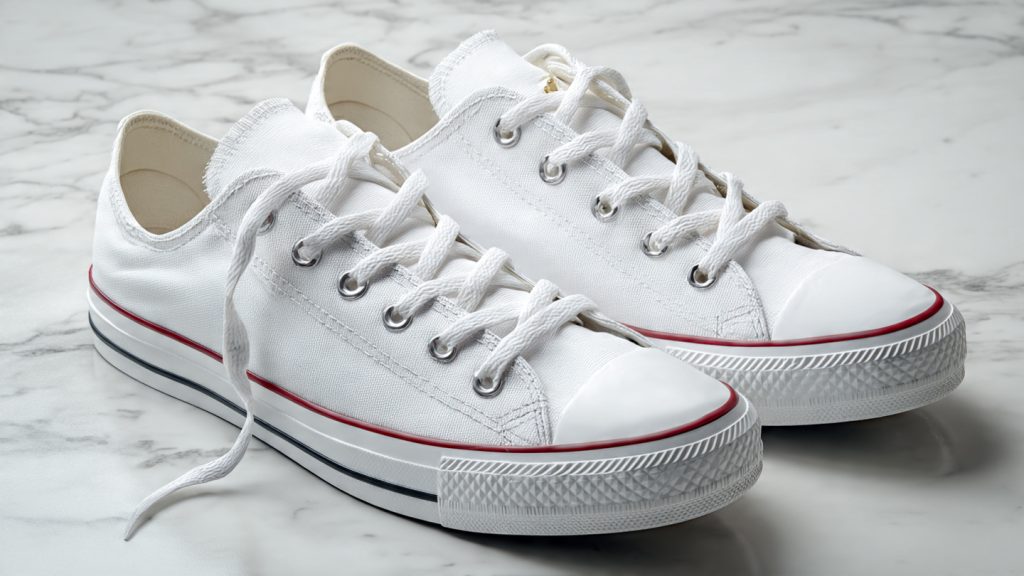
How to Clean White Converse
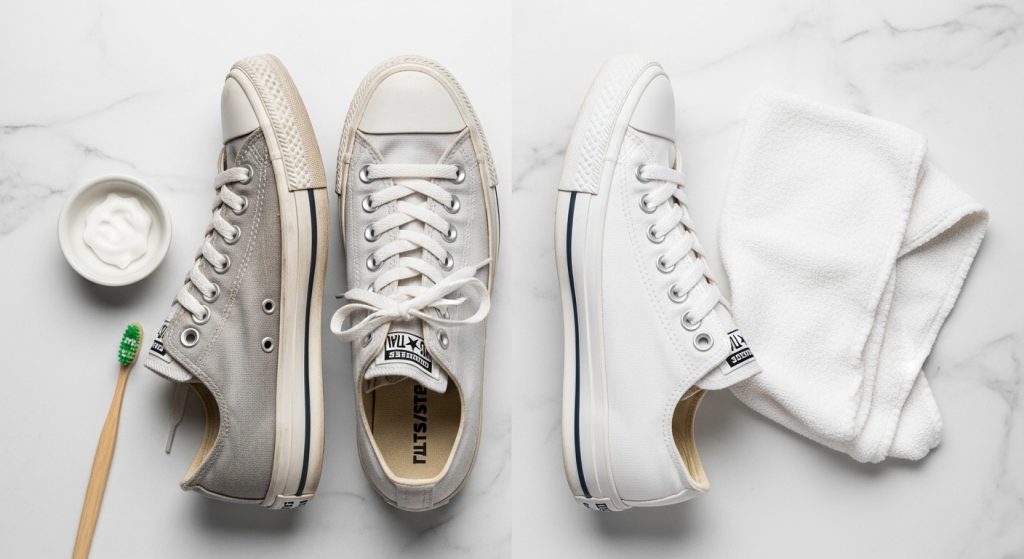
The fastest way to clean white Converse:
- Remove laces and dry brush all loose dirt off canvas and rubber
- Mix 1 tablespoon baking soda + 1 tablespoon white vinegar + 1 tablespoon warm water
- Apply paste to canvas with a toothbrush in circular motions
- Let paste sit for 15–20 minutes
- Wipe clean with a damp microfiber cloth
- Use a Magic Eraser on the rubber toe cap and sole
- Wash laces separately in warm soapy water
- Stuff with paper towels and air dry indoors away from sunlight
White Converse are one of the most iconic sneakers ever made — and one of the fastest to look dirty. The porous canvas upper absorbs dirt, the white rubber toe cap scuffs at first contact and the foxing tape around the sole collects grime in every seam. The good news is that Converse are also one of the most satisfying sneakers to clean. White canvas responds dramatically to the right cleaning method and a pair that looks beyond saving can be restored to near box-fresh condition in under an hour.
This complete guide covers every method for cleaning white Converse — baking soda paste, washing machine, toothpaste, hydrogen peroxide and Magic Eraser — with specific steps for the canvas upper, rubber toe cap, foxing tape, sole and laces. Every part of the shoe cleaned properly, in the right order.
Table of Contents
- What You Will Need
- Before You Start
- Method 1 — Baking Soda Paste (Best Results)
- Method 2 — Mild Soap and Water
- Method 3 — Washing Machine
- Method 4 — Hydrogen Peroxide for Bright White
- Method 5 — Toothpaste for the Rubber
- How to Clean Each Part of White Converse
- How to Clean White Converse Laces
- How to Dry White Converse Correctly
- Common Converse Cleaning Problems
- How to Keep White Converse Clean Longer
- FAQ
What You Will Need
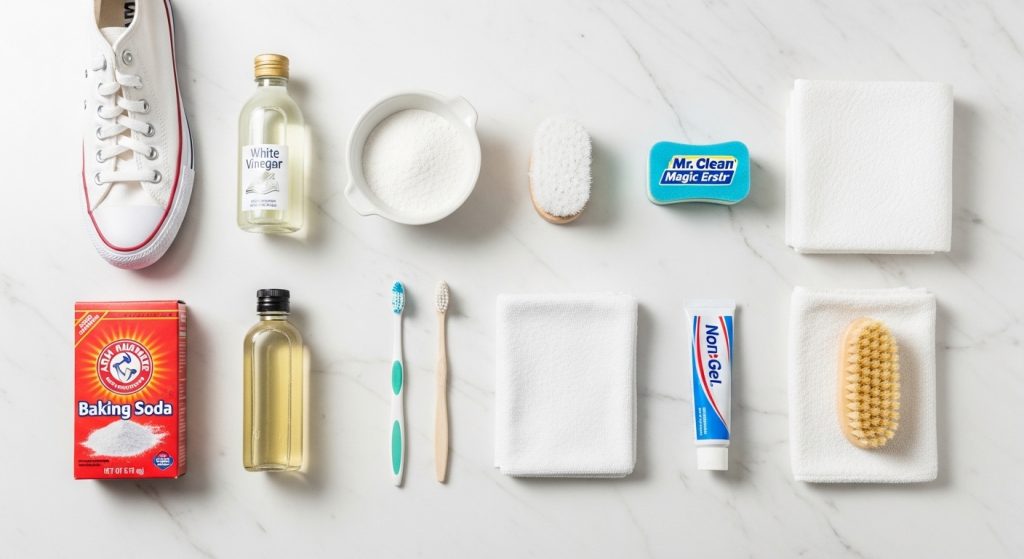
You almost certainly have everything you need already at home. Here is the complete kit:
Essential tools:
- Old toothbrush or soft-bristle brush
- White microfiber cloths — white only, never colored
- Small bowl for mixing paste
- Paper towels for drying
Household cleaning agents:
- Baking soda
- White vinegar
- Mild dish soap
- White non-gel toothpaste
- Hydrogen peroxide 3% (for brightening)
Optional but recommended:
- Mr. Clean Magic Eraser — essential for the rubber toe cap and foxing tape
- Jason Markk Premium Shoe Cleaner — best all-purpose product safe on canvas
- Crep Protect Spray — apply after cleaning to prevent future staining
- Mesh laundry bag — required if machine washing
Pro tip from Converse: The official Converse cleaning guidance recommends lukewarm water and mild soap only and advises against machine washing. In practice, the baking soda methods below produce significantly better results on heavily soiled canvas — but always test any new cleaning product on a hidden area like the inside edge of the tongue before applying to the full shoe.
Before You Start
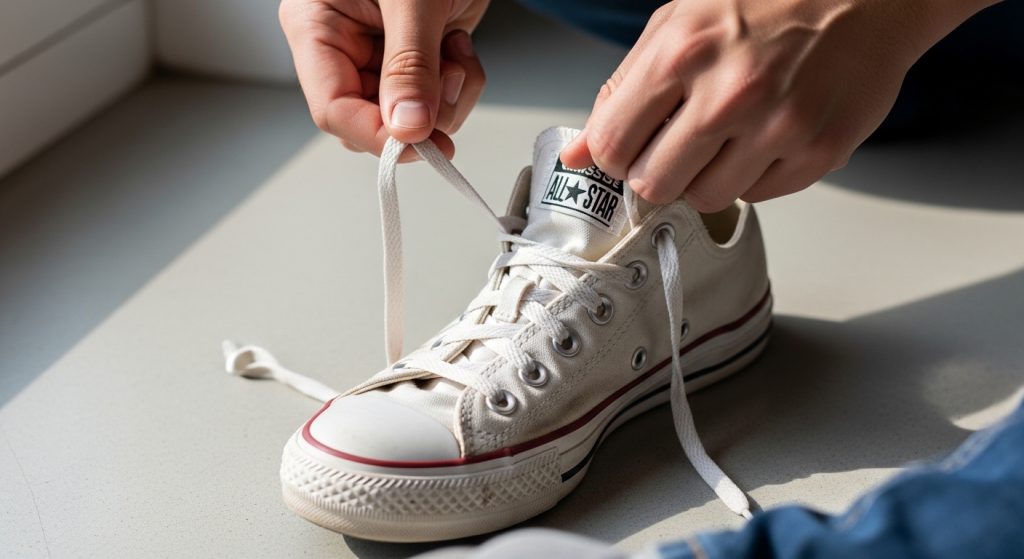
Three preparation steps before any wet cleaning begins. Skipping these makes the cleaning process harder and less effective.
Step 1 — Remove the laces completely. Pull them out of every eyelet and set them aside. Laces need to be cleaned separately — attempting to clean them while still in the shoe means you never reach the canvas underneath the lace line, which is often the dirtiest area of the whole shoe.
Step 2 — Dry brush the entire shoe. Use a stiff dry brush or old toothbrush to sweep away all loose dirt, dried mud and dust from the canvas, rubber foxing tape, toe cap and sole grooves while the shoe is completely dry. This is the single most important preparation step. If you apply wet cleaning solution directly to dry caked dirt you will turn it into mud and spread it deeper into the canvas. Dry brush first — every time.
Step 3 — Tap the soles together outdoors. Hold both sneakers over a bin or outdoors and tap the rubber soles together firmly to dislodge debris packed into the sole grooves. This takes ten seconds and prevents you from spreading outdoor grime onto your cleaning surface.
Method 1 — Baking Soda Paste (Best Results)
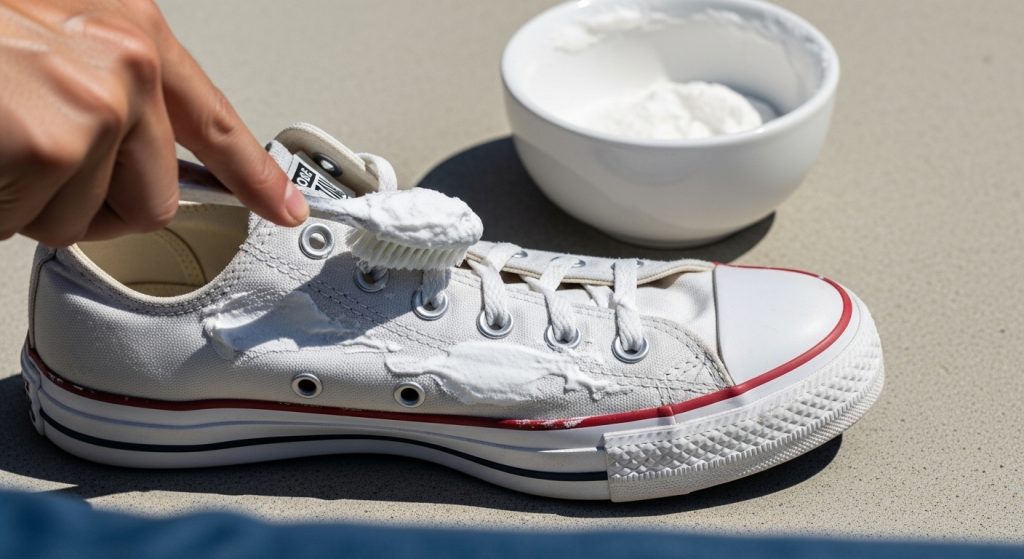
This is the most effective method for cleaning white Converse canvas and delivers the most dramatic before-and-after result of any home method. The baking soda paste lifts embedded canvas stains while the vinegar helps break down grime without damaging the cotton fibers.
What you need:
- 1 tablespoon baking soda
- 1 tablespoon white vinegar
- 1 tablespoon warm water
- Old toothbrush
- White microfiber cloth
Steps:
- Mix the baking soda, white vinegar and warm water in a small bowl. The mixture will fizz — this is normal. Stir until a smooth paste forms.
- Dip the toothbrush into the paste and apply generously to the canvas upper, working section by section in small circular motions.
- Cover the entire canvas surface evenly — do not forget the tongue and the area just below the lace line which tends to be the dirtiest part of any Converse.
- Apply a second layer of paste over the first coat.
- Let the paste sit on the shoe for 15–20 minutes minimum. For heavily soiled canvas, leave for up to 30 minutes.
- For sun-activation method: after applying the paste, place shoes in direct sunlight for 3–4 hours. The UV light activates a bleaching effect that brightens canvas significantly more than indoor drying.
- Once the paste has dried on the surface, use a clean damp microfiber cloth to wipe away all residue. For heavy staining, rinse gently under cool running water.
- Inspect the canvas — any remaining stains can be treated with a second application before drying.
- Move on to the rubber sections (toe cap, foxing tape, sole) using Method 5 below.
Best for: Canvas upper, visible stains, grey dingy canvas that has lost its white appearance, grass stains Avoid on: Leather Converse, suede Converse, the rubber sections (use Magic Eraser on rubber instead)
Why it works: Baking soda is a mild alkaline abrasive that physically lifts embedded surface particles from the canvas weave. The vinegar is a mild acid that reacts with the baking soda to create a fizzing action that penetrates the cotton fibers. Together they are more effective than either ingredient alone.
Method 2 — Mild Soap and Water
The safest everyday maintenance method and the one officially recommended by Converse themselves. This will not produce the dramatic whitening of the baking soda paste but is the right choice for regular weekly cleaning to prevent stains from building up over time.
Steps:
- Mix a few drops of mild dish soap into a bowl of lukewarm water until slightly sudsy.
- Dip a soft cloth or toothbrush into the solution and wring out — it should be damp not wet.
- Wipe and scrub the canvas in gentle circular motions working from the toe to the heel.
- Use the same solution on the rubber sections but scrub more firmly.
- Wipe away all soap residue with a clean damp cloth — important because soap residue left on white canvas dries and causes yellowing.
- Air dry stuffed with paper towels indoors.
Best for: Regular maintenance cleaning, lightly dirty Converse, weekly upkeep between deep cleans
Method 3 — Washing Machine
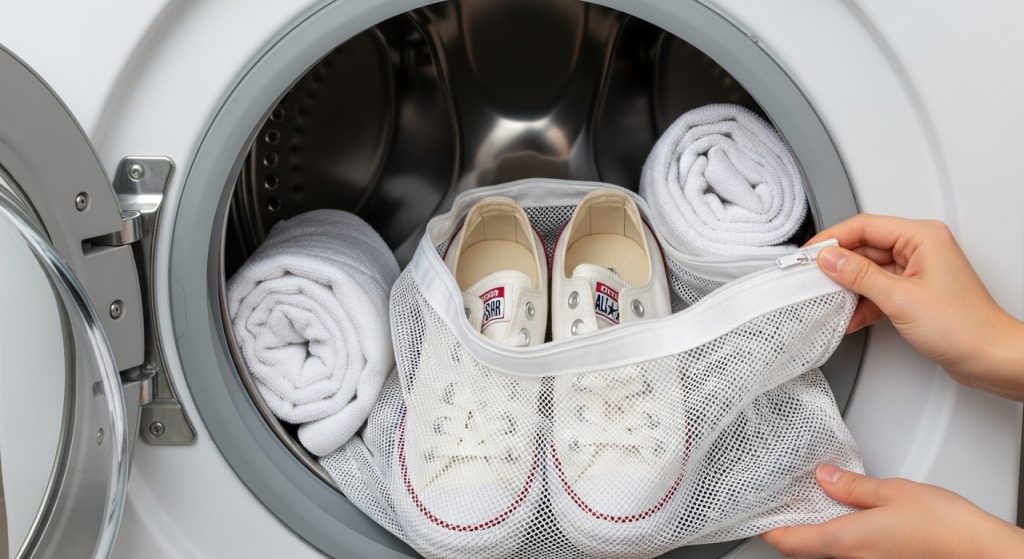
Machine washing is an option for canvas Converse when hand methods have not achieved the result you want or the shoes need a full interior refresh. This method carries more risk than hand washing — the agitation can loosen the adhesive bonding the sole to the canvas over many washes — but done correctly with cold water and a gentle cycle it is safe for most canvas Chuck Taylors.
Important warning: Never machine wash leather Converse, suede Converse or any Converse with non-canvas panels. Machine washing is for canvas only.
Steps:
- Remove laces and insoles completely — both need to be washed separately.
- Pre-treat any heavily stained areas on the canvas with the baking soda paste method above before placing in the machine.
- Place both sneakers inside a mesh laundry bag. This protects them from impact against the drum during the wash cycle.
- Add two or three old white towels to the drum. This balances the load so the shoes do not bang around and also helps prevent sole separation by reducing the impact on the glued edge.
- Add a small amount of mild liquid detergent — never powder detergent which can leave chalky white residue trapped in the canvas. Never use bleach in the machine wash — it causes yellowing on canvas and weakens the adhesive.
- Select: cold water, gentle or delicate cycle, lowest spin speed available.
- Remove the sneakers immediately when the cycle ends — leaving wet Converse sitting in a closed machine causes mildew odor.
- Stuff with paper towels to maintain shape and air dry completely indoors away from sunlight. Allow at least 24 hours before wearing.
Pro tip: Add the laces to a separate small mesh bag and run them through the same machine wash cycle for perfectly clean laces with no extra effort.
Method 4 — Hydrogen Peroxide for Bright White Canvas
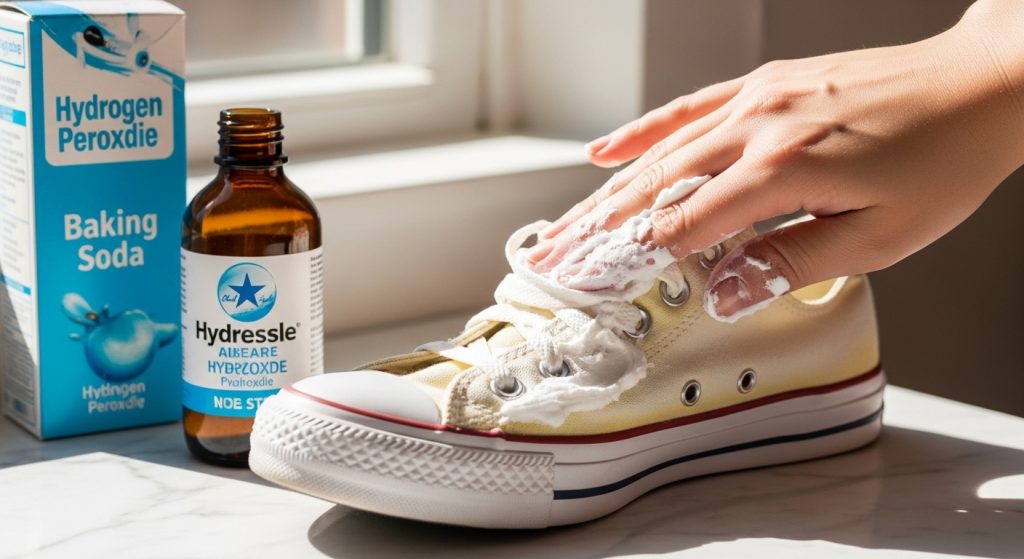
When white Converse canvas has yellowed significantly from age, sweat or improper drying, the hydrogen peroxide method is the most powerful brightening treatment available at home. The hydrogen peroxide acts as a mild bleaching agent that whitens without the long-term damage caused by chlorine bleach.
What you need:
- 1 tablespoon baking soda
- ½ tablespoon hydrogen peroxide (3%)
- Small amount of warm water to adjust consistency
- Toothbrush
- Clear plastic wrap (optional but recommended)
Steps:
- Mix baking soda and hydrogen peroxide into a thick paste. The consistency should be similar to toothpaste — thick enough to stay on the canvas without running.
- Apply the paste evenly across all canvas surfaces with a toothbrush, covering every yellowed area.
- For maximum effect, wrap the canvas sections loosely in clear plastic wrap after applying the paste — this prevents the hydrogen peroxide from evaporating before it has time to work.
- Place the sneakers in direct sunlight for 1–4 hours. The UV light activates the hydrogen peroxide and significantly amplifies the whitening effect. The longer the sun exposure the whiter the result.
- Remove the plastic wrap, wipe away the dried paste completely with a damp cloth.
- Inspect — for severe yellowing repeat the process a second time.
- Air dry indoors before wearing.
Best for: Yellowed canvas, older Converse that have lost their white color, shoes that have yellowed from improper dryer use Important: Always apply to canvas only — not the rubber sections
Method 5 — Toothpaste for Rubber Toe Cap and Sole
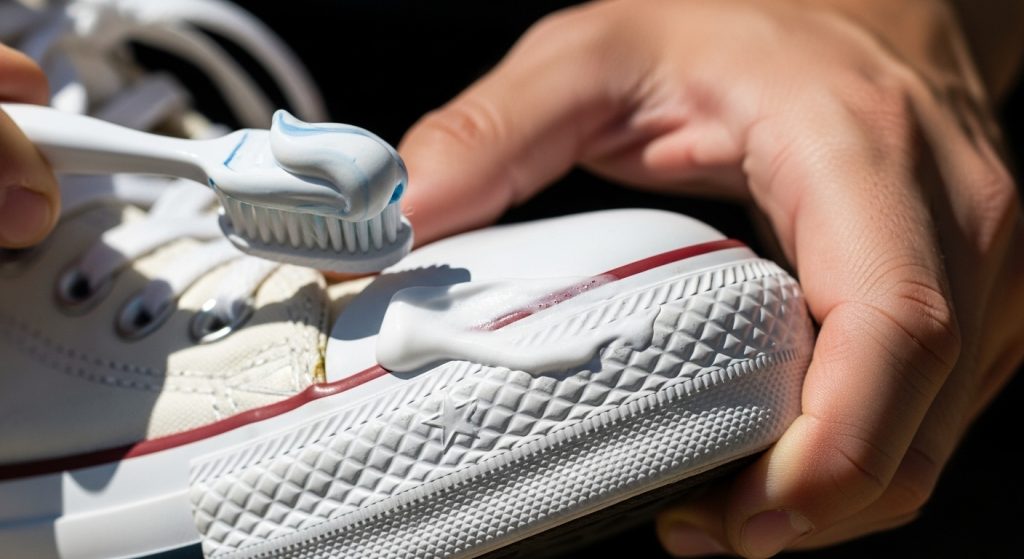
White non-gel toothpaste is one of the best cleaning agents for the rubber sections of Converse — the toe cap, foxing tape and midsole sole edge. The mild abrasives in toothpaste clean and polish rubber exceptionally well and the white color means there is no risk of dye transfer.
What you need:
- White non-gel toothpaste only — never colored gel or striped toothpaste
- Old toothbrush
- Damp microfiber cloth
Steps:
- Squeeze a small amount of white toothpaste directly onto the rubber toe cap.
- Use a damp toothbrush to scrub in circular motions — apply firm pressure on the rubber, the rubber is durable and can handle more scrubbing than the canvas.
- Work along the entire foxing tape edge around the sole, getting the toothbrush into the groove where the rubber meets the canvas.
- Let the toothpaste sit for 10 minutes.
- Wipe clean with a damp cloth, removing every trace of toothpaste.
- For any remaining scuffs on the toe cap use a damp Magic Eraser with light pressure.
Why the foxing tape groove matters: The groove where the rubber foxing tape meets the canvas is the most overlooked area on any Converse. It collects compressed dirt that neither canvas methods nor rubber methods reach — the toothbrush is the only tool that fits into this seam. Getting this area clean makes an enormous visual difference to the overall appearance of the shoe.
How to Clean Each Part of White Converse
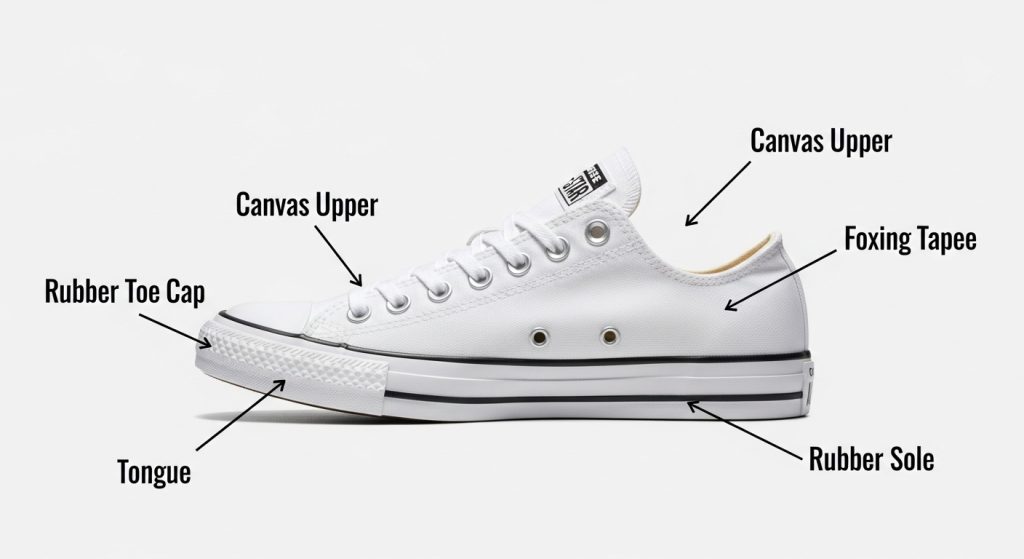
Each part of a Converse sneaker requires a slightly different approach. Clean them in this order for the most efficient result.
Canvas Upper — Baking Soda Paste The main canvas body of the shoe. Use Method 1 (baking soda paste) for deep cleaning or Method 2 (mild soap) for regular maintenance. Always scrub in circular motions with a toothbrush and let the paste sit before wiping. Never use a Magic Eraser on canvas — the abrasion tears the cotton surface fibers.
Rubber Toe Cap — Magic Eraser or Toothpaste The thick rubber cap at the front of every Chuck Taylor. This area gets scuffed immediately and yellows fastest. Use a damp Magic Eraser with light circular motions for scuffs, or white toothpaste with a toothbrush for general cleaning. The rubber is durable and can handle more pressure than the canvas.
Foxing Tape — Toothbrush with Toothpaste The rubber strip that runs all the way around the base of the shoe connecting the sole to the canvas upper. The seam where the foxing tape meets the canvas collects compressed dark grime that is impossible to remove without a toothbrush. Use a toothbrush with toothpaste or baking soda paste and scrub firmly along the entire seam.
Tongue — Same as Canvas The tongue absorbs sweat and often becomes the most deeply stained part of the interior canvas. Remove the laces completely to access the full tongue surface. Use the same baking soda paste method as the main canvas and scrub firmly — the tongue can handle more pressure than the upper sides.
Rubber Sole — Stiff Brush + Baking Soda The bottom of the shoe. Use a stiff brush with baking soda paste to clean the flat sections and a toothbrush to get into the grooves. A Magic Eraser also works well on the flat sole surface for general brightening.
How to Clean White Converse Laces
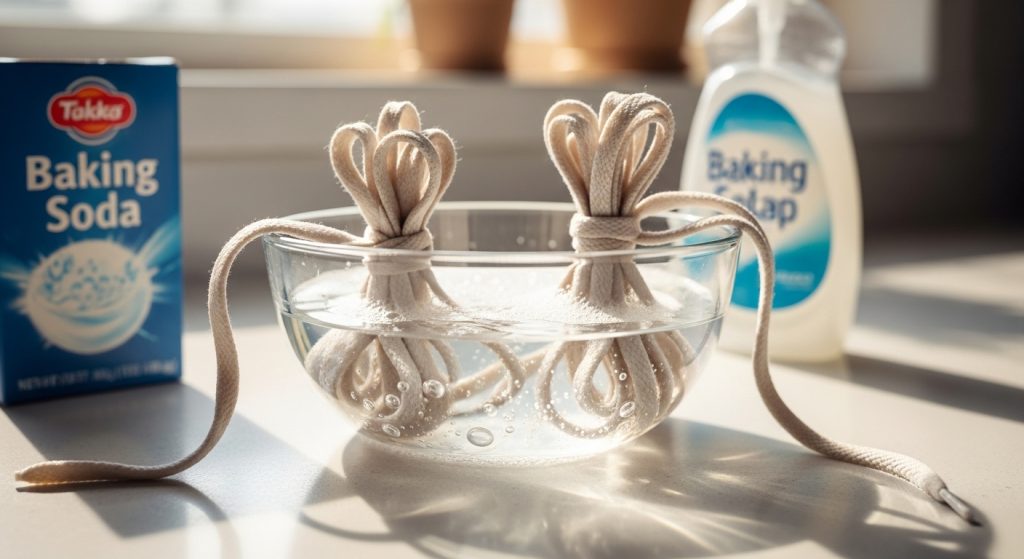
Clean laces make or break the overall appearance of freshly cleaned Converse. Even perfectly cleaned canvas looks wrong paired with dirty grey-white laces. Always clean the laces separately and at the same time as the shoes so everything dries together.
Hand wash method (recommended):
- Place laces in a small bowl of warm water with a few drops of mild dish soap and a small amount of baking soda.
- Let them soak for 20–30 minutes — the soaking dissolves surface grime with no scrubbing required.
- For stubborn yellowing, add a small amount of hydrogen peroxide to the soak.
- After soaking, rub the laces between your fingers to agitate any remaining dirt loose.
- Scrub individual stained sections with a toothbrush.
- Rinse thoroughly under running water until water runs completely clear — any soap residue left in laces causes them to feel stiff and look dull.
- Lay flat on a clean cloth to air dry — never hang vertically as this stretches the cotton.
Machine wash method: Place laces in a small mesh bag or tied inside a pillowcase and add to the washing machine alongside the sneakers. Use cold water gentle cycle. Air dry flat.
Replacement option: White cotton replacement Converse laces cost very little and are available everywhere. If your laces are heavily stained yellow or permanently grey, replacing them delivers an instant dramatic improvement in the overall appearance of the shoe and takes 60 seconds to do.
How to Dry White Converse Correctly
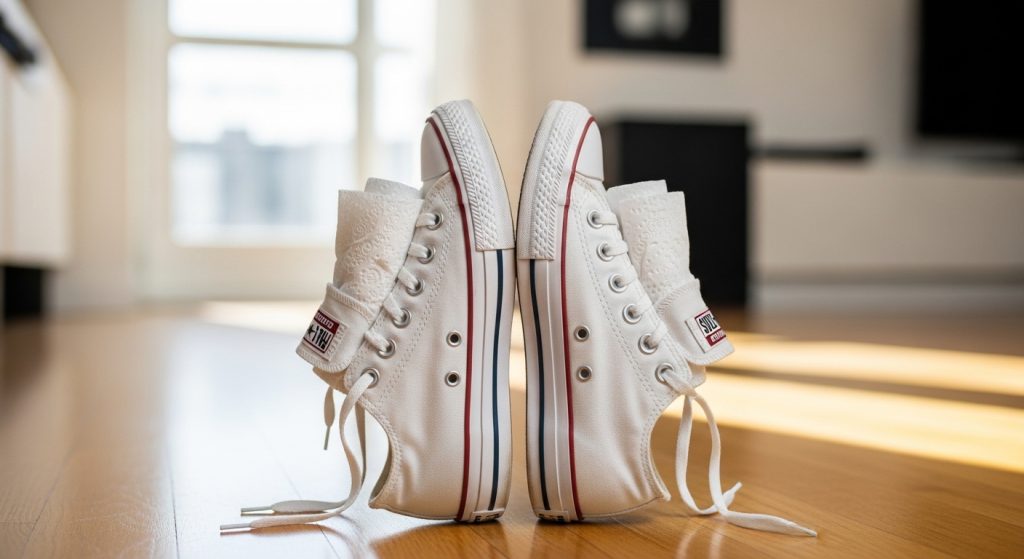
How you dry your Converse after cleaning is as important as how you clean them. The three most common Converse cleaning mistakes all happen during the drying stage.
The correct method:
- After cleaning and rinsing, remove excess moisture by pressing a clean dry towel firmly against all surfaces — do not rub, just press and absorb.
- Stuff both shoes firmly with white paper towels or newspaper. Pack them fully so the shoe holds its shape — Converse canvas is flexible and will dry in a collapsed or wrinkled shape if not supported. Replace the paper towels after a few hours if they become saturated.
- Place the stuffed shoes in a well-ventilated indoor location away from direct sunlight — a spot with airflow like beside an open window is ideal.
- Allow at least 24 hours to dry fully before wearing. Canvas that feels dry on the surface may still be damp internally — wearing damp Converse causes the inside to develop permanent odor.
Never do these things:
- Never put Converse in the dryer. The high heat causes the canvas to shrink, yellows the rubber and weakens the adhesive bonding the sole to the upper. This is irreversible.
- Never dry in direct sunlight. UV exposure causes white canvas and rubber to yellow — the exact problem you just cleaned away.
- Never dry near a radiator, heater or heat vent. The concentrated heat has the same damaging effect as a dryer.
- Never use a hairdryer. Even on a cool setting the concentrated airflow and heat damages the canvas fibers and rubber glue over time.
Common Converse Cleaning Problems
Grey Canvas That Will Not Come Clean
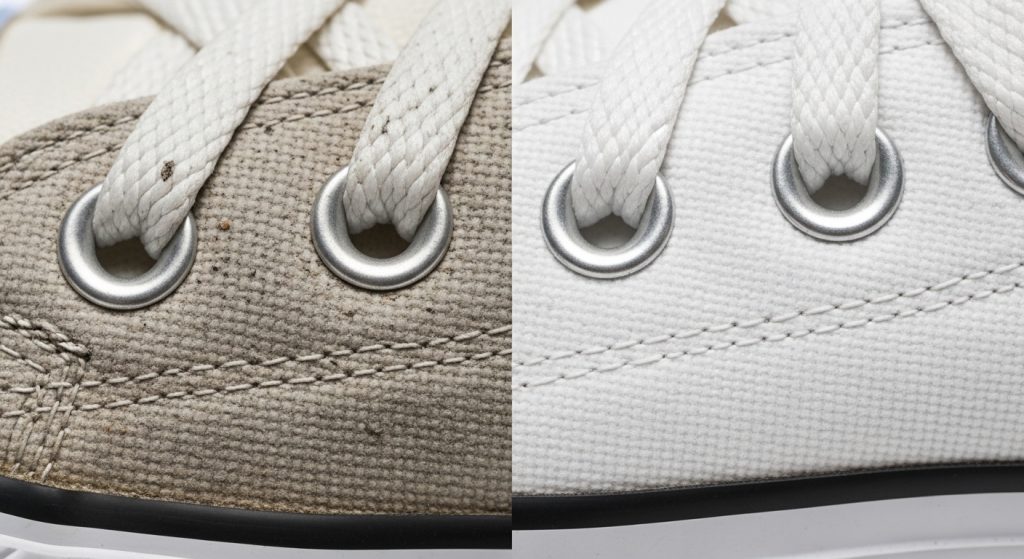
Grey canvas that has built up grime over months or years is the toughest Converse cleaning challenge. The baking soda paste method alone sometimes does not fully restore severely greyed canvas in a single treatment.
Solution for deeply grey canvas: Apply the hydrogen peroxide and baking soda paste (Method 4), wrap in plastic wrap and place in direct sunlight for the full 3–4 hours rather than 1–2. After wiping clean, apply a second treatment the same day before the canvas fully dries. Two consecutive treatments on the same day produce significantly better results than one treatment per day over two days. The canvas is most receptive to the second application while still slightly damp from the first wipe-down.
Yellow Toe Cap
The white rubber toe cap yellows from oxidation — exposure to UV light and oxygen over time causes the rubber to develop a yellowish tinge that regular cleaning does not address.
Solution: Apply a thick paste of baking soda and hydrogen peroxide directly to the rubber toe cap. Unlike the canvas method, you do not need to let this sit — scrub immediately and firmly with a toothbrush for 2–3 minutes. The abrasion combined with the hydrogen peroxide removes oxidation from the rubber surface. Wipe clean and inspect. For severe yellowing, place the shoes in direct sunlight for 1–2 hours after applying the paste to activate UV-powered oxidation reversal.
Permanent Yellow Stains from Previous Bleach Use
If white Converse have been cleaned with bleach before and developed the characteristic orange-yellow bleach yellowing, this is one of the hardest staining problems to fix because bleach chemically alters the canvas fibers rather than just depositing surface dirt.
Partial solution: The hydrogen peroxide and sunlight method (Method 4) can reduce bleach yellowing but rarely eliminates it completely. Multiple consecutive treatments over several days produce the best possible result. Manage expectations — bleach damage is often permanent. This is the strongest argument for never using bleach on white Converse canvas in the first place.
Mildew Smell After Washing
A mildew smell means the interior of the Converse was not dried completely before the next wear, allowing bacteria and mold to develop in the damp canvas.
Solution: Sprinkle baking soda generously inside both shoes and leave overnight — the baking soda absorbs residual moisture and neutralizes odor. Shake out completely and repeat if needed. For persistent mildew smell, mix equal parts white vinegar and water in a spray bottle, lightly mist the interior canvas, stuff with paper towels and air dry completely for 48 hours in a ventilated space.
How to Keep White Converse Clean Longer
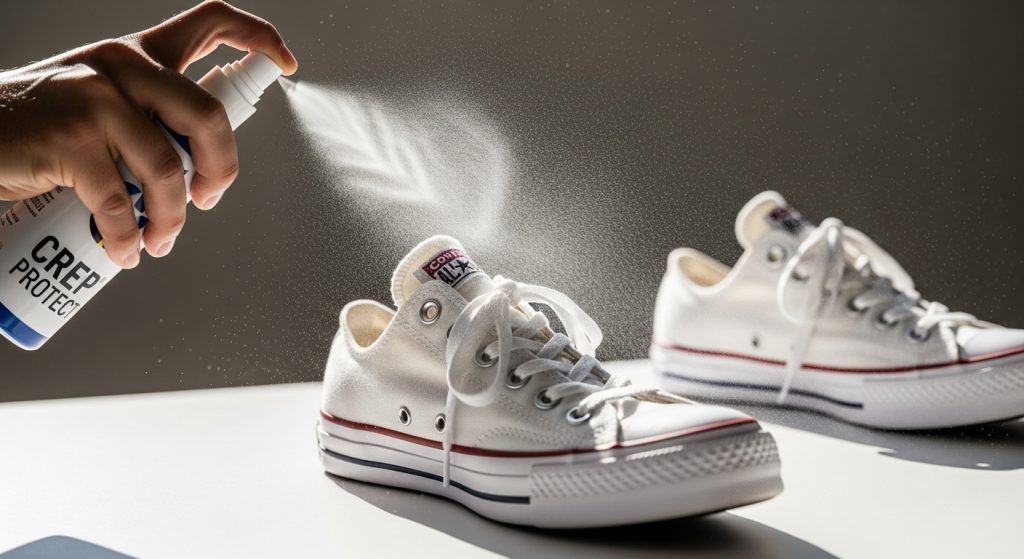
Preventing staining is ten times more efficient than removing it. These five habits keep white Converse cleaner for significantly longer between deep cleans.
Apply a canvas protector spray immediately after every clean. Crep Protect Spray or a similar hydrophobic sneaker protector spray creates an invisible barrier over the canvas that causes water and stains to bead off the surface rather than absorbing into the fibers. One application takes two minutes and lasts 2–3 weeks of regular wear. This is the single highest-impact habit for white Converse specifically because canvas is so porous and absorbs stains so readily.
Wipe after every single wear. A 30-second wipe with a slightly damp cloth after taking your Converse off removes fresh surface dirt before it has time to bond to the canvas fibers. Fresh dirt lifts off instantly. The same dirt after 24 hours requires 20 minutes of scrubbing. After a week it may be permanent.
Never dry in direct sunlight or a dryer. UV exposure is the primary cause of white Converse yellowing during normal storage and drying. Always dry in a shaded indoor location.
Store in a breathable bag not an airtight box. Airtight storage traps moisture and accelerates the yellowing of both canvas and rubber through oxidation. Breathable cotton shoe bags or the original box with the lid slightly open are both better storage options than sealed plastic containers.
Replace laces before they look dirty. White cotton Converse laces are inexpensive and readily available. Replacing them every few months keeps the overall appearance fresh without any cleaning effort at all.
FAQ
What is the best way to clean white Converse? The best home method for white Converse is a paste made from 1 tablespoon baking soda, 1 tablespoon white vinegar and 1 tablespoon warm water applied to the canvas with a toothbrush and left for 15–20 minutes before wiping clean. This method lifts embedded canvas stains and restores the white color better than any other household approach. Use a Magic Eraser separately on the rubber toe cap and foxing tape for scuffs and marks.
Can I put white Converse in the washing machine? Yes — canvas Converse can be machine washed on a gentle cold cycle in a mesh laundry bag with mild liquid detergent and a couple of towels added for balance. Remove laces and insoles before washing. Never machine wash leather or suede Converse. Always air dry after — never use a dryer. Converse officially advises against machine washing because it can damage the shoes over repeated washes, but a single careful machine wash is safe for most canvas Chuck Taylors.
How do I get the rubber toe cap white again? A damp Magic Eraser with light circular pressure removes most scuffs and surface grime from the rubber toe cap in under two minutes. For yellowed rubber on the toe cap, apply a thick paste of baking soda and hydrogen peroxide directly to the rubber, scrub firmly with a toothbrush and place in direct sunlight for 1–2 hours for UV-activated brightening. Wipe clean and repeat if needed.
Can I use bleach on white Converse? No — bleach is not recommended for white Converse canvas. Despite the logical appeal of using bleach on white shoes, chlorine bleach causes canvas fibers to break down, weakens the adhesive bonding the sole to the upper and — most importantly — causes an orange-yellow chemical yellowing that is extremely difficult to reverse. Use the baking soda and hydrogen peroxide method instead for all whitening needs.
Why did my white Converse turn yellow after washing? Yellowing after washing is almost always caused by one of three things: drying in direct sunlight (UV causes oxidation), leaving soap or cleaning product residue on the canvas before drying (residue reacts with light and heat to yellow), or using a dryer (heat causes irreversible yellowing of both canvas and rubber). Rewash using the baking soda paste method, rinse very thoroughly to remove all residue, and air dry indoors in a shaded ventilated location.
How long do white Converse take to dry after washing? Properly stuffed with paper towels and air dried indoors, white Converse typically take 24 hours to dry fully in normal room temperature conditions. In humid weather or a poorly ventilated room this can extend to 48 hours. The canvas may feel dry on the outside surface while remaining damp internally — wearing them too soon causes permanent odor. When in doubt, leave them another few hours.
How do I clean the inside of white Converse? Remove the insoles (if removable) and wash them separately with mild soap and water, then allow to dry fully. For the inside canvas, sprinkle baking soda inside each shoe and leave overnight to absorb odor and moisture. For visible staining on the interior canvas around the heel lining, use a damp cloth with a small amount of mild soap applied carefully — avoid saturating the interior which makes drying much slower.
How often should I clean white Converse? Wipe the canvas and rubber with a damp cloth after every wear — 30 seconds per shoe. Do a full baking soda paste clean every 2–4 weeks if worn regularly. Machine wash every 1–2 months if needed for a full interior and exterior refresh. Clean immediately after any mud, grass or significant soiling — the sooner you treat a stain the easier it comes out.
More Guides on HowToCleanWhiteSneakers.com
Clean by brand:
- How to Clean White Air Force 1s
- How to Clean White Converse
- How to Clean White Vans
- How to Clean White Stan Smiths
- How to Clean White New Balance
- How to Clean White Nike Shoes
- How to Clean White Adidas
Clean by material:
- How to Clean White Leather Sneakers
- How to Clean White Sneakers
- How to Clean White Canvas Shoes
- How to Clean White Mesh Sneakers
- How to Clean White Suede Shoes
Fix the problem:
- How to Get Yellow Stains Out of White Shoes
- How to Get Scuffs Off White Shoes
- How to Remove Grass Stains from White Shoes
- How to Get Mud Off White Shoes
- How to Clean Smelly Sneakers
- How to Clean White Shoelaces
- How to Clean White Shoes with Baking Soda
Protect and maintain:
- How to Keep White Shoes Clean
- How to Protect White Shoes
- How to Store White Sneakers