
White mesh sneakers are lightweight, comfortable, and easy to pair with everyday outfits. However, their breathable fabric can quickly collect dust, mud, sweat marks, and dirt. Because mesh has a woven or knitted structure, grime can settle between its fibers and make the shoes look gray or worn.
Cleaning white mesh sneakers requires a little more care than cleaning leather or rubber. Scrubbing too hard can damage delicate fibers, while excessive water or leftover detergent can leave visible marks.
The good news is that you can clean most everyday white mesh sneakers with a few basic supplies and a gentle hand-cleaning method.
This guide explains how to clean white mesh sneakers step by step, remove common stains, clean the soles and laces, and dry your shoes without unnecessarily damaging the material.
Quick answer: Remove the laces, brush away dry dirt with a soft-bristled brush, and gently clean the mesh using a small amount of mild detergent diluted in cool or lukewarm water. Work in small sections, wipe away the cleaning residue with a clean damp cloth, and let the sneakers air-dry in a well-ventilated shaded area.
Why White Mesh Sneakers Need Special Cleaning
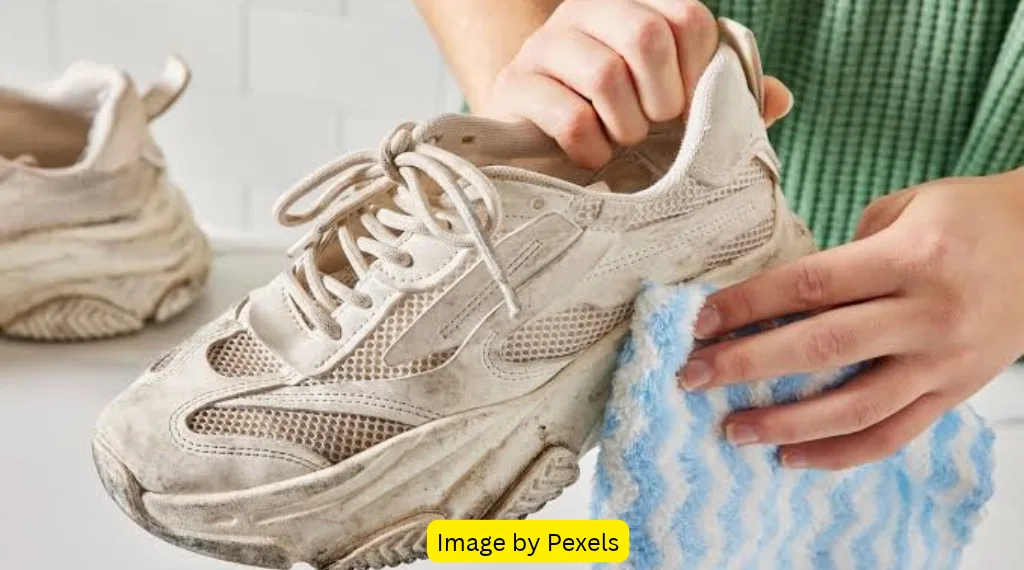
Mesh sneakers are different from leather and canvas shoes because their uppers contain small openings or knitted fibers that allow air to circulate.
This construction makes them breathable, but it also creates a few cleaning challenges.
- Embedded dirt: Fine dust and mud can settle between the mesh fibers rather than remaining on the surface.
- Delicate fibers: Aggressive scrubbing can snag, stretch, or roughen the material.
- Visible discoloration: Sweat, everyday grime, and detergent residue can make white mesh appear gray or uneven.
- Water sensitivity: Excessive moisture can affect cushioning, adhesives, and other shoe components.
- Mixed materials: Many sneakers combine mesh with synthetic overlays, rubber, foam, or even suede.
For these reasons, the safest approach is to identify the shoe’s materials, use minimal moisture, and clean each section with an appropriate tool.
What You Need to Clean White Mesh Sneakers
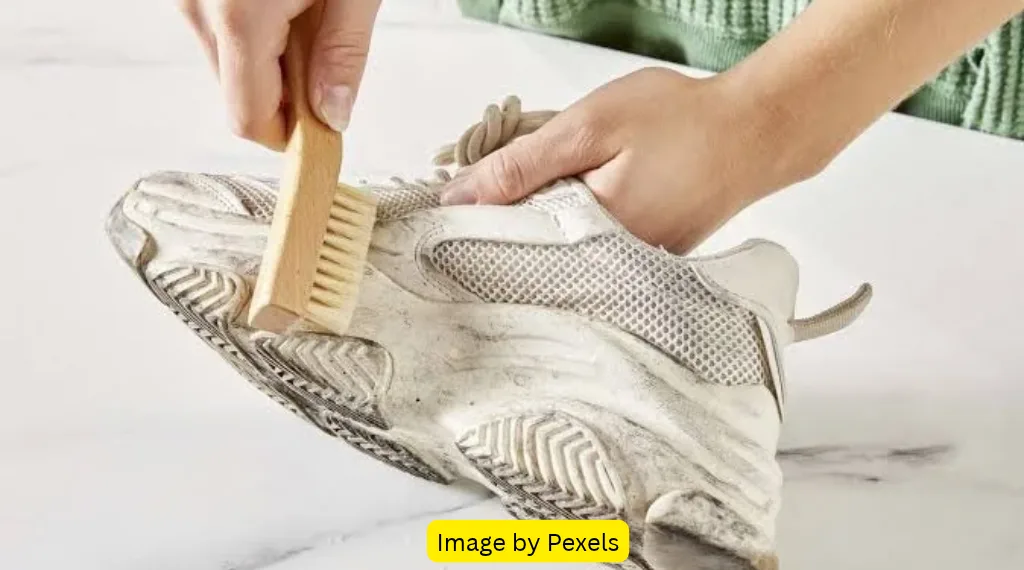
You do not need an expensive sneaker-cleaning kit to get started. A few basic supplies are usually enough for everyday dirt.
| Cleaning supply | Purpose |
|---|---|
| Soft-bristled shoe brush | Removing loose dirt and gently cleaning mesh |
| Clean toothbrush | Reaching small seams and narrow areas |
| Microfiber cloth | Wiping away dirt and cleaning residue |
| Mild liquid detergent | Cleaning everyday grime |
| Small bowl | Mixing the cleaning solution |
| Cool or lukewarm water | Diluting detergent |
| Clean white towel | Blotting excess moisture |
| White paper towels | Supporting the shoe while drying |
Keep a separate brush or cloth for the rubber soles. Dirt from the bottom of your sneakers should not be transferred back onto the clean mesh upper.
Before cleaning: Check the manufacturer’s care instructions for your exact shoe. If it includes suede, leather, waterproof membranes, or delicate coatings, those sections need their own cleaning method.
How to Clean White Mesh Sneakers Step by Step
Follow these steps to remove everyday dirt while protecting the delicate fabric.
Step 1: Remove the Shoelaces and Insoles
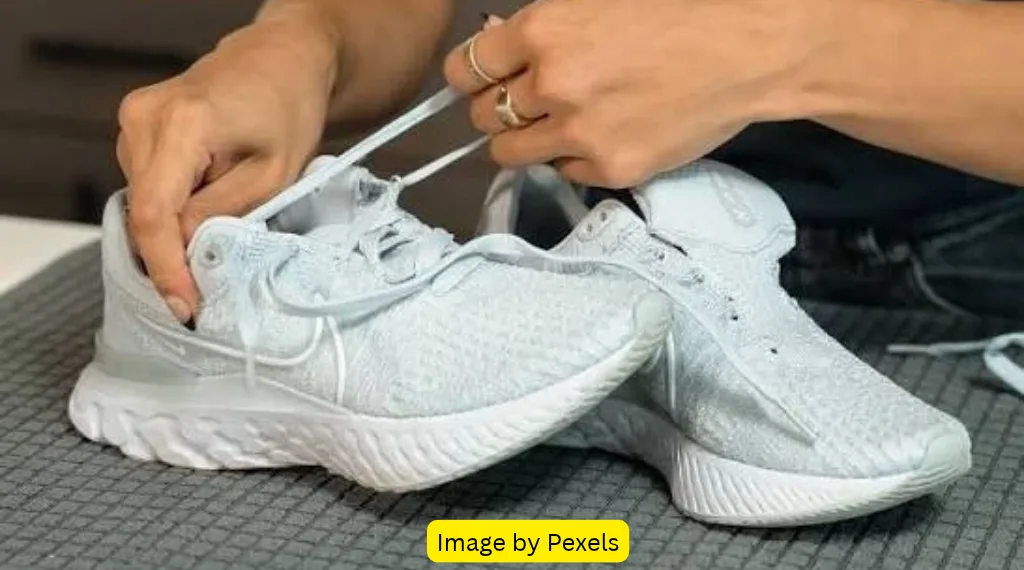
Start by removing the shoelaces from both sneakers.
If the insoles are designed to be removable, take them out as well. This makes it easier to clean around the tongue, eyelets, and inside edges.
Set these components aside for separate cleaning.
Do not force an insole out if it is attached to the shoe.
Step 2: Brush Away Loose Dirt
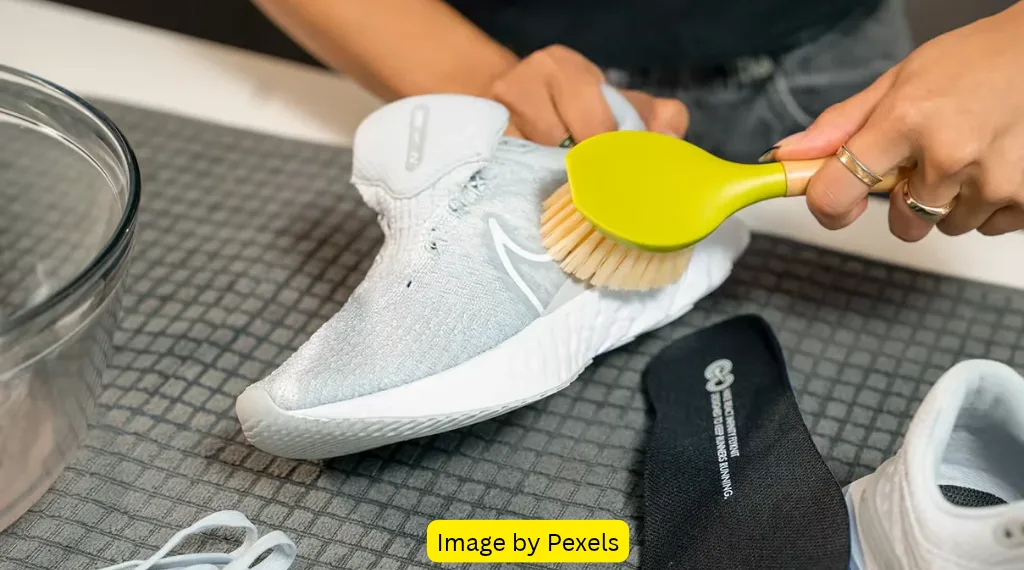
Before using any water, remove as much loose dirt as possible.
Use a clean, soft-bristled brush and gently sweep across the mesh upper.
Pay attention to:
- The toe box.
- The sides of the sneakers.
- The area around the laces.
- The tongue.
- The seams and edges.
Use short, light strokes rather than aggressive back-and-forth scrubbing.
If mud is still wet, allow it to dry before brushing. Trying to remove wet mud immediately can spread it deeper into the fabric.
Step 3: Prepare a Gentle Cleaning Solution
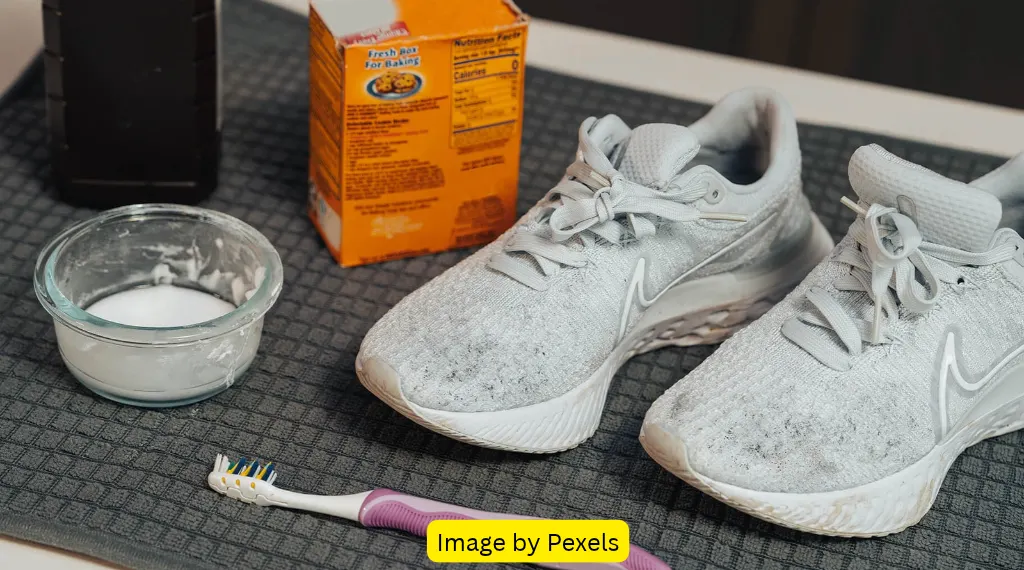
Fill a small bowl with cool or lukewarm water.
Add a small amount of mild liquid detergent and mix until it is diluted.
Avoid making the solution overly concentrated. Too much detergent can be difficult to remove from mesh and may leave residue once the sneakers dry.
For delicate or expensive sneakers, a cleaner specifically approved for mesh or knit materials may be a better option.
Do not mix cleaning products together. In particular, never combine bleach with vinegar, ammonia, or other household cleaners.
Step 4: Test the Cleaning Solution
Before cleaning the entire sneaker, test your solution on a small, inconspicuous section.
Use a clean white cloth or soft brush to apply a little of the solution.
Check whether:
- The mesh changes color.
- Dye transfers onto the cloth.
- The fibers become rough.
- Any printed or bonded details begin to lift.
If you notice an unwanted change, stop and follow the shoe manufacturer’s recommended cleaning method instead.
Step 5: Gently Clean the Mesh Upper
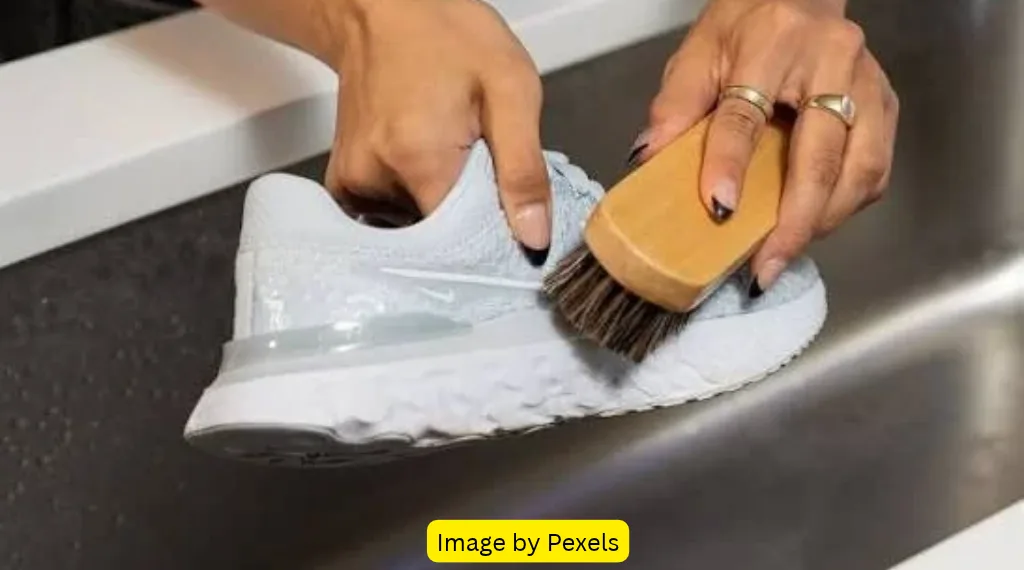
Dip a soft-bristled brush or microfiber cloth into the cleaning solution.
Remove excess liquid before touching the sneaker. The tool should be damp, not dripping wet.
Work on one small section at a time.
- Start with the toe box.
- Move to the outer side panels.
- Clean the inner side panels.
- Gently wipe the tongue.
- Finish around the eyelets and seams.
Use light pressure and follow the direction of the mesh weave where possible.
For visible dirt, repeat a gentle cleaning pass instead of scrubbing harder.
Avoid soaking the upper or pushing large amounts of water through the fabric.
Step 6: Clean Stubborn Dirt Carefully
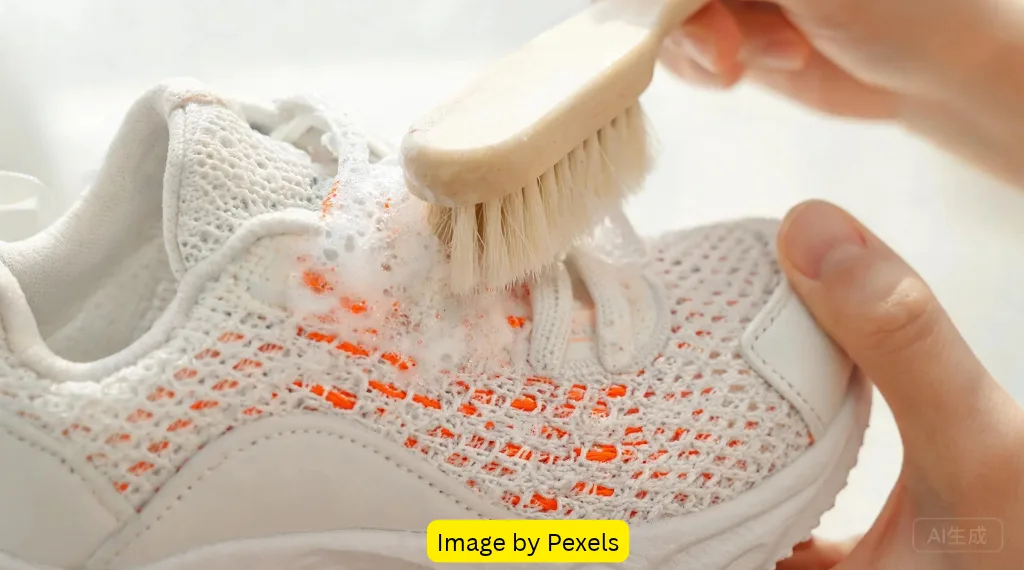
Some dirt may remain trapped between the mesh fibers after the first cleaning pass.
For these areas, use a clean soft toothbrush with a small amount of diluted cleaning solution.
Gently work the bristles over the affected area.
If the stain does not improve, do not keep increasing the pressure. The fibers may be more vulnerable than the stain itself.
For persistent discoloration, consider a mesh-compatible sneaker cleaner or professional cleaning service.
Step 7: Clean the Rubber Soles Separately
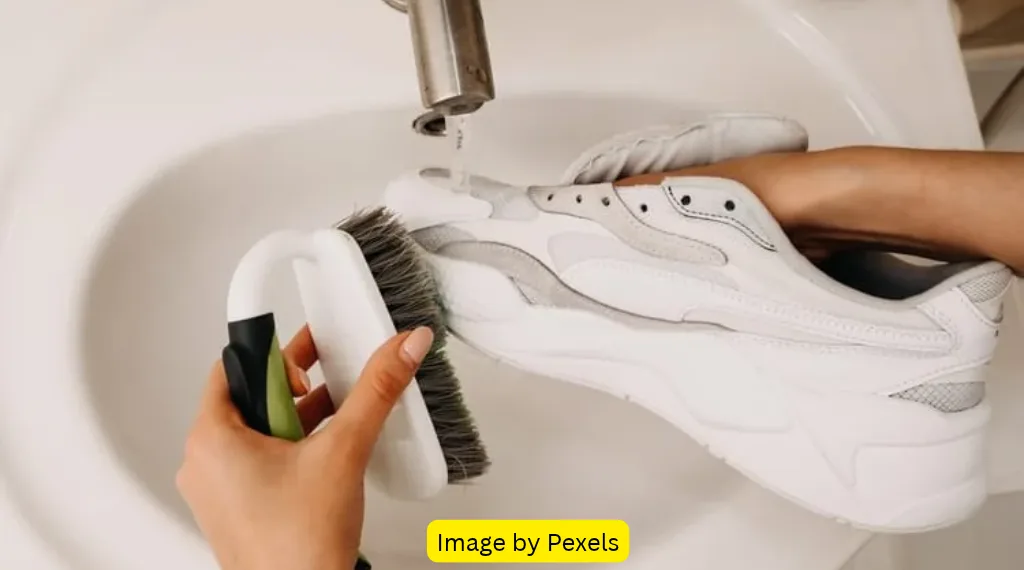
The rubber midsoles and outsoles often collect more stubborn dirt than the mesh upper.
Use a separate brush with mild soap and water to clean these areas.
Pay particular attention to:
- The white rubber sidewalls.
- The toe bumper.
- The outsole grooves.
- The edges where the upper meets the sole.
A slightly firmer brush can be used on durable rubber, but avoid transferring it to the mesh.
Wipe away the loosened dirt using a clean damp cloth.
Step 8: Remove All Cleaning Residue
Once the sneakers look clean, use another microfiber cloth dampened with plain water.
Gently wipe the mesh to remove any remaining detergent.
This step matters because dried cleaning residue can make white fabric look dull or create uneven marks.
Avoid rinsing the entire sneaker under running water unless its manufacturer specifically permits that method.
Step 9: Clean the Shoelaces Separately
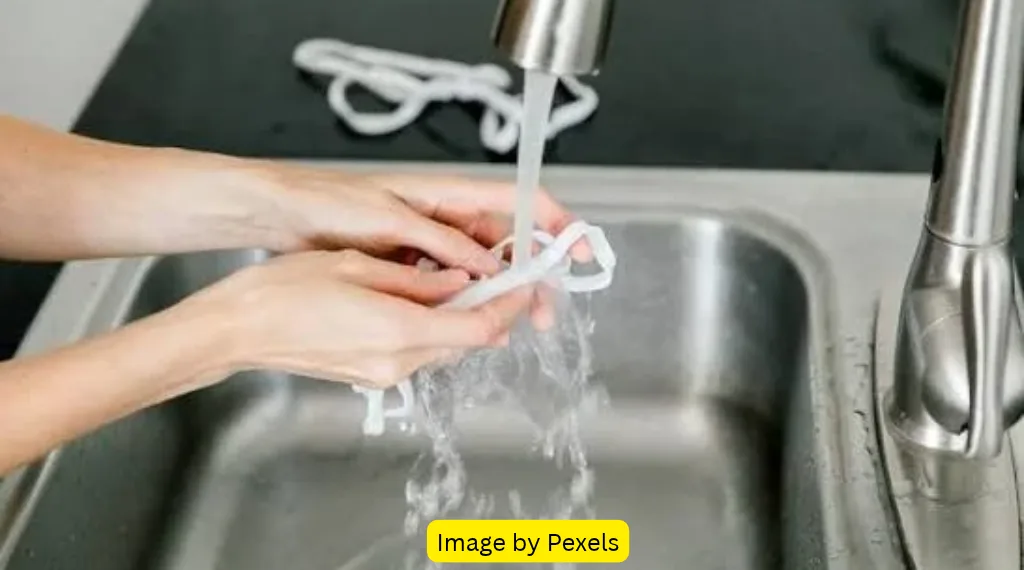
Place the removed shoelaces in a bowl of lukewarm water with a small amount of mild detergent.
Gently rub them between your fingers to loosen dirt.
Rinse thoroughly with clean water and press them between a towel to remove excess moisture.
Leave the laces to air-dry before putting them back into the shoes.
Step 10: Air-Dry Your White Mesh Sneakers
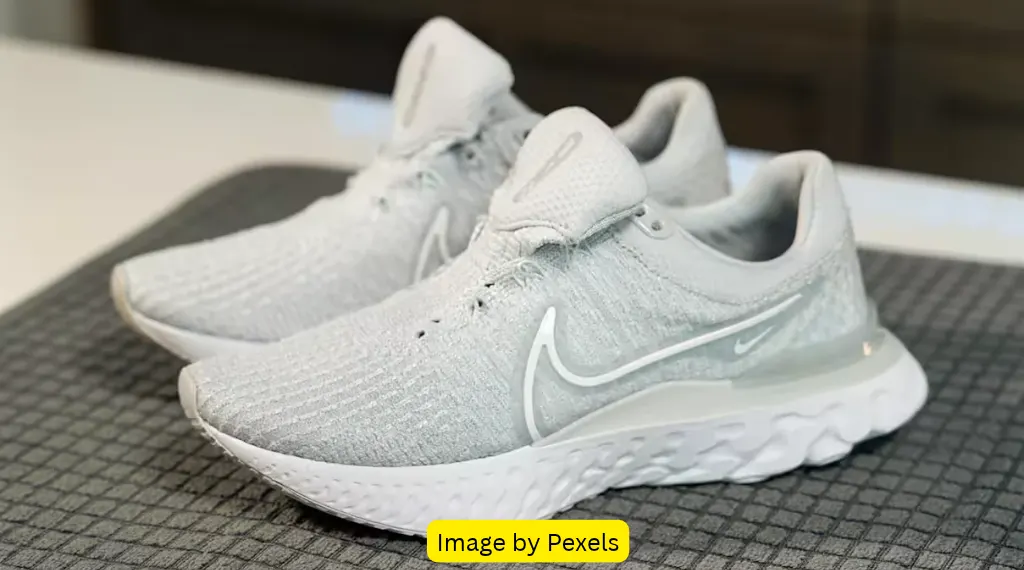
After cleaning, drying the sneakers properly is essential.
Follow these precautions:
- Place the shoes in a well-ventilated area.
- Keep them away from direct sunlight.
- Avoid radiators and heaters.
- Do not use a hair dryer.
- Avoid tumble dryers unless the manufacturer explicitly permits them.
- Leave the laces and removable insoles out until dry.
You can place clean, unprinted white paper towels loosely inside the sneakers to help absorb moisture and support their shape.
Replace the paper if it becomes damp.
Wait until the mesh, lining, tongue, and cushioning are completely dry before wearing the sneakers again.
How to Remove Different Stains From White Mesh Sneakers
Different stains may require different treatments. The following table provides a safe starting point.
| Type of stain | Suggested first approach |
|---|---|
| Everyday dust | Dry brushing followed by gentle cleaning |
| Mud | Allow it to dry, brush away loose dirt, then spot-clean |
| Grass stains | Use a manufacturer-approved fabric or sneaker cleaner |
| Sweat marks | Gently clean with diluted mild detergent |
| Gray discoloration | Clean the entire affected panel evenly and remove residue |
| Food stains | Blot fresh spills and use a suitable fabric cleaner |
| Dirty rubber soles | Use a separate brush and mild soap solution |
How to Remove Mud From White Mesh Sneakers
Mud should be allowed to dry before you begin cleaning.
Once dry, gently brush away the loose dirt.
Prepare a mild detergent solution and use a soft brush to clean the remaining mark.
Wipe the area with a clean damp cloth to remove residue.
If mud has settled deep into the mesh, repeat the gentle process rather than applying excessive pressure.
How to Remove Grass Stains
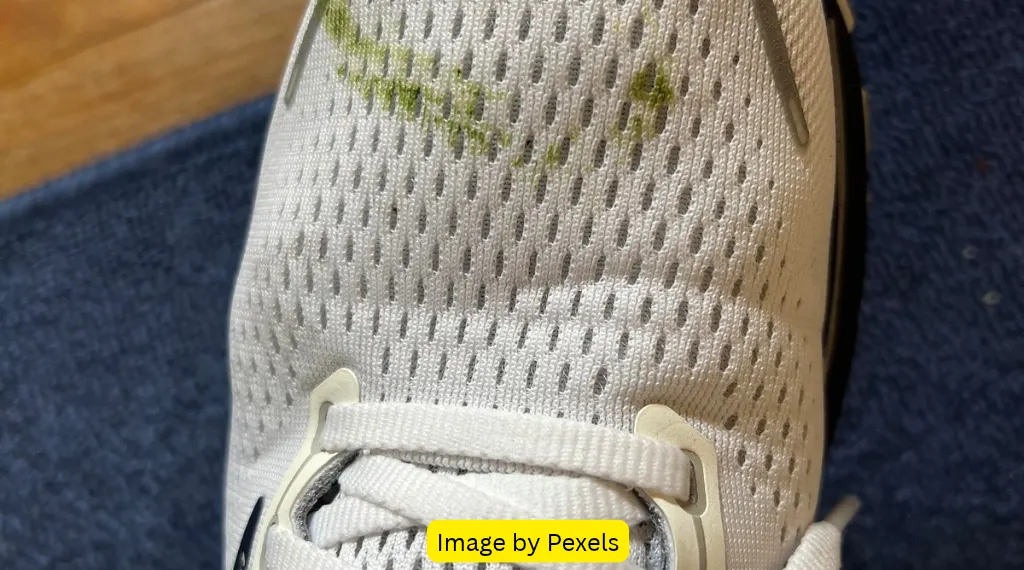
Grass stains can be difficult because the pigment may remain visible after ordinary cleaning.
Start with a fabric-safe or sneaker cleaner that the manufacturer approves for your shoe.
Apply it to a small hidden section first, following the product instructions.
If the test is successful, treat the affected area gently and remove all product residue.
Avoid applying chlorine bleach directly to white mesh. It can damage synthetic fibers or affect other materials used in the shoe.
How to Remove Gray Marks From White Mesh
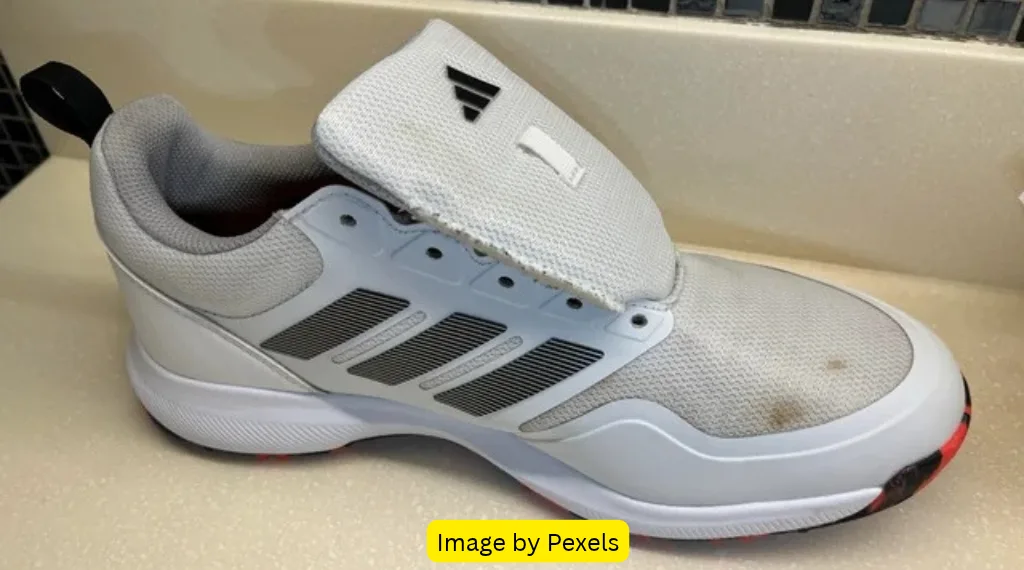
White mesh can develop a gray appearance from accumulated dust, sweat, and everyday grime.
Start by brushing away dry dirt.
Then clean the entire affected panel with a diluted mild detergent solution instead of repeatedly scrubbing only one small spot.
Use a clean damp cloth to remove the detergent evenly.
Allow the sneakers to dry naturally and inspect the result.
If the gray appearance remains, the material may be permanently stained or discolored. More aggressive cleaning is not necessarily the solution.
How to Deal With Yellowish Mesh
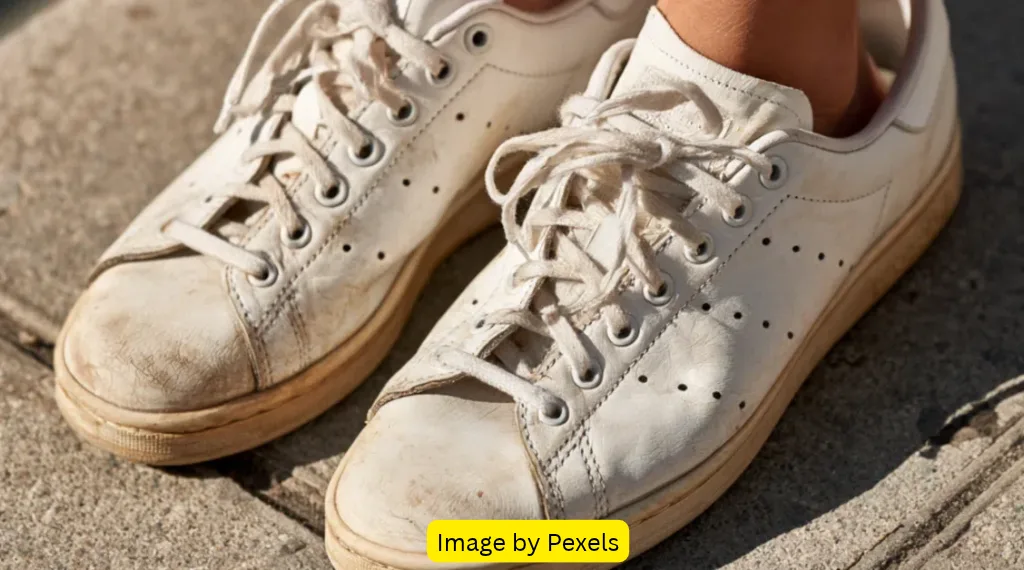
Yellow discoloration is not always ordinary surface dirt.
It may be related to aging, oxidation, previous cleaning products, exposure to heat, or changes in the material itself.
Start with a gentle cleaning method and check the manufacturer’s care instructions.
Avoid experimenting with bleach, peroxide, or strong household mixtures. These products may create uneven discoloration or damage the fibers.
If the yellowing remains after gentle cleaning, a professional sneaker cleaner may be able to assess whether it can be improved.
Can You Use Baking Soda to Clean White Mesh Sneakers?
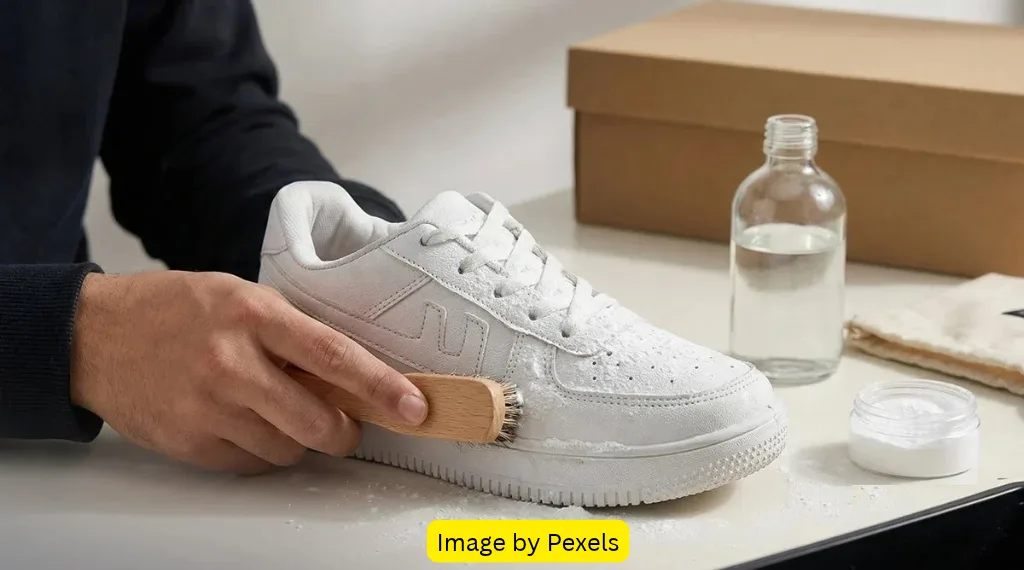
Baking soda is sometimes recommended as a household sneaker-cleaning ingredient, but it is not automatically suitable for every mesh material.
Some manufacturers publish baking-soda methods for particular white mesh shoes, while others recommend avoiding household cleaning products.
For example, Nike’s instructions for certain white mesh shoes include a baking-soda paste. That does not mean the same mixture is safe for every brand, fabric blend, or mixed-material sneaker.
Before trying it:
- Check the manufacturer’s instructions.
- Confirm that the method applies to your exact shoe material.
- Test it on a hidden section.
- Avoid aggressive brushing.
- Remove any residue according to the instructions.
If you cannot confirm that baking soda is suitable for your sneakers, use a mild detergent solution or an approved mesh cleaner instead.
Can You Put White Mesh Sneakers in the Washing Machine?
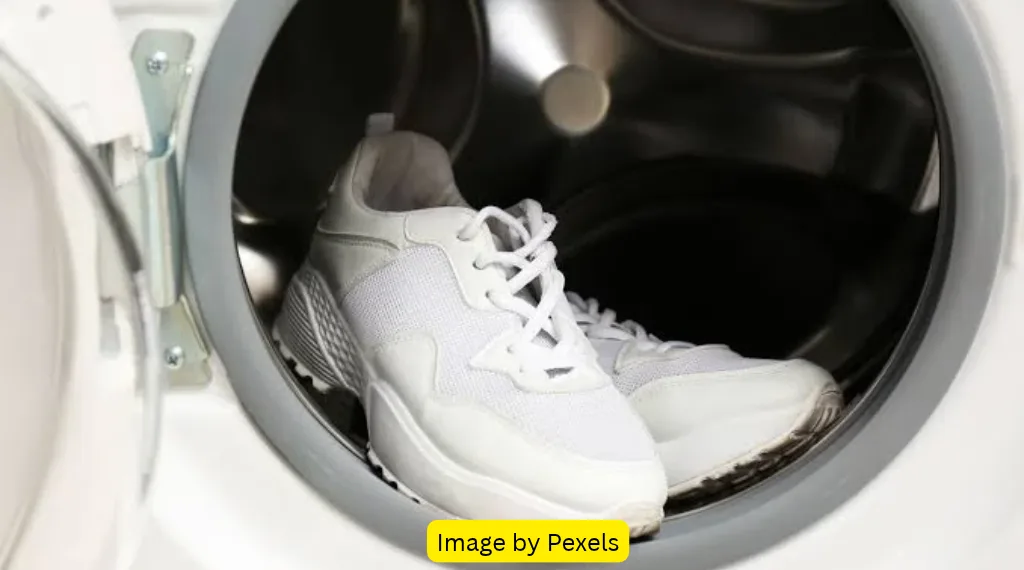
Some mesh sneakers can be machine-washed, but others cannot.
The answer depends on the shoe’s construction, including its adhesives, foam cushioning, overlays, and other materials.
Always check the care label or manufacturer’s instructions before using a washing machine.
If machine washing is explicitly permitted:
- Remove the laces and removable insoles.
- Brush away loose dirt first.
- Place the sneakers in a suitable mesh laundry bag if instructed.
- Use the approved gentle cycle and water temperature.
- Follow the detergent instructions.
- Allow the shoes to air-dry completely.
Do not assume that all mesh sneakers are machine-washable simply because their uppers are made from fabric.
Hand-cleaning is the more controlled starting point when the care instructions are unclear.
Common Mistakes to Avoid When Cleaning White Mesh Sneakers
Mesh can be damaged by cleaning methods that are too aggressive.
| Mistake | Why it is a problem |
|---|---|
| Using a hard-bristled brush | Can snag or roughen delicate fibers |
| Scrubbing aggressively | May stretch or damage the weave |
| Using too much detergent | Can leave residue in the fabric |
| Soaking the entire sneaker | May affect adhesives, foam, and shoe structure |
| Using chlorine bleach | Can damage fibers and cause discoloration |
| Using very hot water | May affect adhesives and other shoe materials |
| Mixing cleaning chemicals | Can create dangerous reactions |
| Using a dirty sole brush on the upper | Transfers dirt back onto clean mesh |
| Drying with direct heat | Can damage materials and construction |
| Wearing shoes before they are dry | Can trap moisture inside the shoe |
The most important rule is to use the least aggressive cleaning method that works.
How to Keep White Mesh Sneakers Clean for Longer
Regular maintenance makes it easier to keep your sneakers looking fresh.
1. Remove loose dirt regularly
Use a soft, dry brush after wearing your sneakers in dusty environments. This prevents loose dirt from accumulating.
2. Clean stains promptly
Fresh marks are often easier to remove than dirt that has settled into the fabric over time.
3. Store your shoes in a dry place
Keep sneakers in a clean, ventilated storage area. Avoid damp cupboards and locations exposed to strong sunlight.
4. Allow your shoes to dry between wears
If your sneakers become damp from rain or perspiration, let them dry fully before wearing them again.
5. Use a suitable fabric protector
A protector designed specifically for your shoe’s material may help reduce future staining. Check the label and test it before applying it to the entire upper.
6. Avoid unnecessary deep cleaning
Repeated aggressive cleaning can wear down delicate fibers. Regular light maintenance is usually a better approach.
Frequently Asked Questions
1. What is the best way to clean white mesh sneakers?
The best starting method is gentle hand-cleaning with a soft brush, diluted mild detergent, and cool or lukewarm water. Clean in small sections, remove the residue with a damp cloth, and air-dry naturally.
2. Can I use dish soap to clean white mesh shoes?
A small amount of mild dish soap may work on some mesh sneakers, provided the manufacturer allows it. Dilute it well, test it on a hidden area, and remove all residue afterward.
3. Can I use baking soda and vinegar on white mesh sneakers?
Do not assume this combination is safe for mesh. Cleaning methods vary between manufacturers, and some mixtures may affect synthetic fibers, coatings, or adhesives. Follow the care instructions for your exact shoes instead.
4. Does bleach damage white mesh sneakers?
Chlorine bleach can damage or discolor synthetic fibers and may affect other shoe materials. Avoid using it unless the manufacturer specifically approves it for your particular sneakers.
5. Can I put white mesh sneakers in the washing machine?
Only if the manufacturer explicitly permits machine washing. Some fabric sneakers can tolerate a gentle wash, but others contain adhesives, foam, or delicate components that may be damaged.
6. How do I clean white mesh sneakers without soaking them?
Use a lightly damp microfiber cloth or soft brush with diluted cleaning solution. Work in small sections, then wipe away the residue using a separate clean damp cloth.
7. Why do my white mesh sneakers look gray after cleaning?
Gray marks may come from embedded dirt, uneven cleaning, or leftover detergent. Try gently cleaning the entire affected panel and removing residue evenly. If the discoloration remains, it may be a material stain rather than surface dirt.
8. How do I remove yellow stains from white mesh sneakers?
Start with a gentle cleaner approved for your shoe’s material. Yellowing may result from aging, oxidation, heat, or previous cleaning treatments, so it may not respond to ordinary washing. Avoid experimenting with strong bleaching products.
9. How long do white mesh sneakers take to dry?
Drying time depends on the mesh thickness, interior padding, humidity, and airflow. Allow the shoes to air-dry completely before wearing them. Shoes that have absorbed substantial moisture may need considerably longer than lightly cleaned sneakers.
10. Can I use a toothbrush on white mesh sneakers?
Yes, provided it has soft bristles. Use light pressure and avoid aggressive scrubbing, which can damage delicate fibers.
11. Should I clean the mesh and rubber soles together?
It is better to clean them separately. Use a soft brush for the mesh and a separate brush for the rubber soles to prevent dirt from transferring back onto the upper.
12. How often should I clean white mesh sneakers?
There is no fixed schedule. Remove loose dirt regularly and spot-clean visible stains when necessary. Perform a deeper clean only when the shoes need it.
Final Thoughts
White mesh sneakers can look fresh for longer with the right cleaning routine. The key is to remove loose dirt before adding water, use a gentle cleaning solution, avoid aggressive scrubbing, and let the shoes dry naturally.
Remember that mesh, rubber, leather, and suede require different care. Always check the manufacturer’s instructions before cleaning mixed-material sneakers.
With regular maintenance and careful cleaning, you can keep your white mesh sneakers looking cleaner without unnecessarily wearing down their delicate fabric.
